
Why Your Athlete Breaks When They Make Mistakes
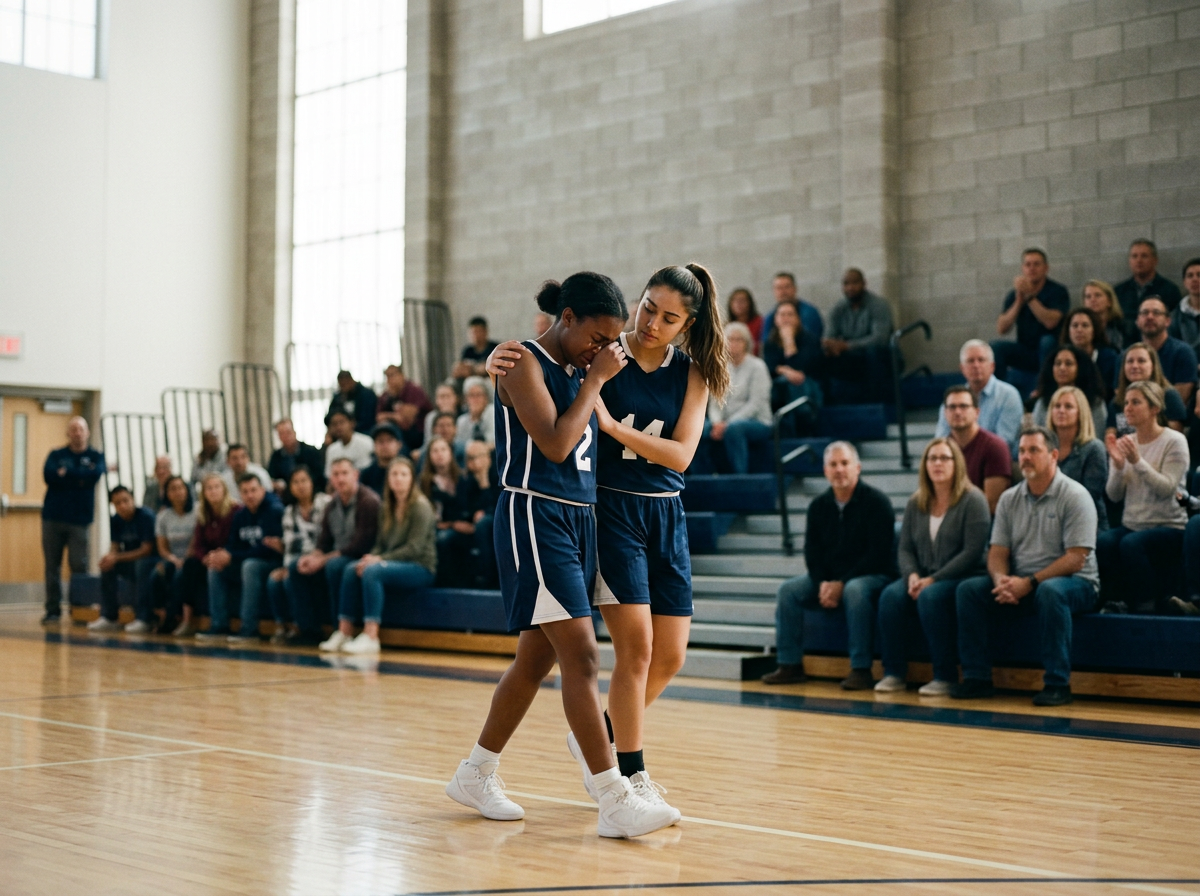
As a parent of a basketball athlete you’ve seen it before.
Your athlete misses a shot and their shoulders slump. They throw the ball. They yell. They stop
talking. They stop attacking. Sometimes the reaction is obvious. Other times, it is much quieter.
Either way, it matters.
Basketball is a game of quick decisions. Athletes have to miss a shot, recover, and be ready for
the next possession. When they spend too much time dwelling on the last mistake, they fall
behind the game in front of them.
The issue is not that they made a mistake.
The issue is that they do not know what to do after it.
Mistakes Are Part of Playing Aggressive Basketball
The athletes who make the fewest mistakes are never the athletes who improve the fastest.
Instead the athletes who improve the fastest are those who regularly turn their mistakes into education.
Aggressive players miss shots. They turn the ball over. They get beat. They make bad reads.
That is part of taking real responsibility on the floor.
The problem starts when athletes treat mistakes as a stopping point, like they are evidence of their lack of ability as a player.
That mindset creates hesitation.
Hesitation causes athletes to pass up open shots, avoid tough matchups, play safe, and stop
making the decisions that could help them grow.
Your athlete does not need to become perfect, instead, they need to become progressive.
Progress Over Perfection
A lot of athletes are chasing perfection without realizing it.
They want the perfect game, the perfect stat line, the perfect shot selection, and the perfect
response every time the ball is in their hands.
That is not how development works.
Perfection makes athletes afraid to fail. Progress gives them permission to keep moving forward.
A perfection mindset says, “I cannot miss this next shot.”
A progressive mindset says, “I missed the last one, but I believe the next one is going in.”
A perfection mindset gets stuck on the turnover.
A progressive mindset identifies the cause and makes the quick adjustment.
Your athlete does not need a perfect game to grow. They need enough perspective to keep
competing after an imperfect play.
How to Help Your Player Make Great Mistakes
1. Anticipate Mistakes
Mistakes should not surprise your athlete.
Every great player misses shots, turns the ball over, and makes poor decisions. When athletes
expect mistakes to be part of competing, they stop treating every error like an emergency.
Build margin into the process by adding it to your training. Don’t make training perfect, it needs to be messy, whether this gets built into the drill or happens naturally.
If your athlete knows a mistake will happen at some point, they are more prepared to respond to
it instead of letting it take over the rest of the game.
2. Deflate Mistakes
Not every mistake deserves a dramatic response.
One bad possession should not become two or three because your athlete is still thinking about
the first one.
Teach them to reset quickly by smiling when they make what seems like a big mistake. This will teach them to take it all it stride, knowing that something great is brewing.
3. Don’t Duplicate Mistakes
Making a mistake is not the problem.
Making the same mistake over and over without learning from it is.
The goal is not mistake-free basketball. The goal is to make new mistakes because your athlete
is learning from the old ones and trying things that stretch their game.
Every mistake should leave them a little smarter, a little more prepared, and a little more
confident than before.
When you see your athlete making the same mistake over and over, this is an opportunity for growth. Train to modify the result and build a new skill.
If Confidence Is Holding Your Athlete Back, Start Here.
If this article sounds like your athlete, do not wait for another season to pass hoping the issue
fixes itself.
The JP3 Mindset Mentor Program gives athletes a monthly development plan that helps them
build the confidence and clarity to compete at a higher level.
Every month, your athlete receives:
A mindset digital course built to strengthen their performance identity and on-court
confidence.
An on-demand skills training program built to develop their basketball skills.
A virtual game-film review session built to create clarity and end confusion when it comes to
playing in games.
This is not another motivational message. It is a consistent process for athletes who are ready to
take their development seriously.
Interested in more information? Complete the JP3 Mindset Mentor Questionnaire -
https://forms.gle/jXemfXzGoibQafMB6.
For more information on our in-person training click here - https://forms.gle/UoP7ya8f12ejFiNj6
