
Is the Confidence Creep Stopping Your Player’s Progress?
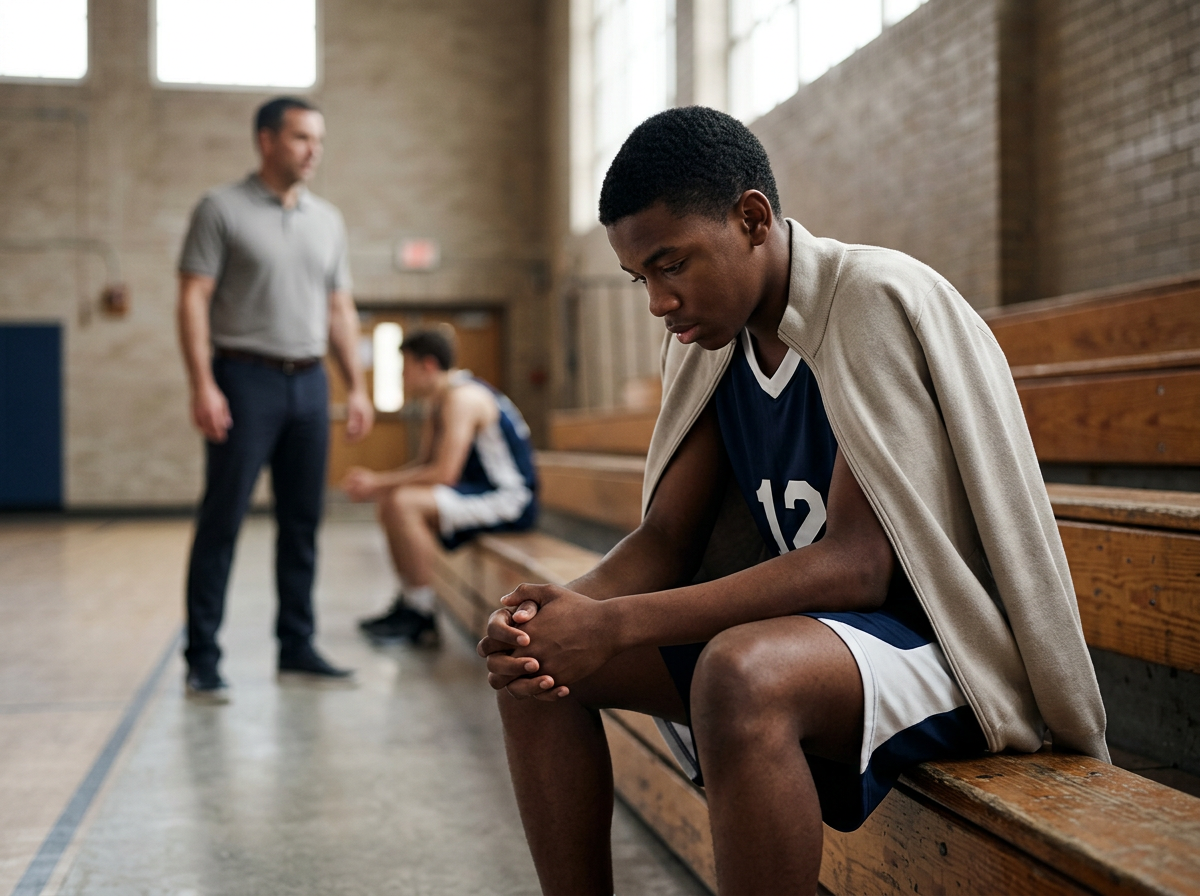
Confidence rarely disappears after one bad game.
It usually slips away one practice, one missed shot, one comparison, and one frustrated
response at a time.
At JP3, we call that the Confidence Creep.
It is the slow erosion of an athlete’s belief in what they can do. At first, it may not look serious.
They turn down a shot they normally take. They stop attacking the basket. Their body language
changes after mistakes. They start playing safe instead of playing free.
Then the real problem starts.
They begin to wonder whether they belong on the floor at all.
Confidence Does Not Fix Itself
Coaches can teach the game. They teach plays, technique, and team concepts.
But its generally not a coach’s expertise or role to teach an athlete how to be confident.
Every athlete has a level of confidence—or a lack of it—and it is either being built or
quietly eroded every day.
That is why parents need to pay attention before the issue becomes obvious in games. By the
time an athlete looks hesitant in front of everyone, they may have already spent weeks building
a story in their head about why they are behind, why they are not good enough, or why they
should stop trying.
The Confidence Creep does not care how talented your athlete is. It can affect the top player on
the team, the athlete playing up an age group, the player who just joined a new roster, or the kid
coming off a rough stretch of games.
Your Athlete Is Reading the Room
Every practice creates a pecking order.
Your athlete sees who gets picked first. They see who wins the drills. They see who gets
praised, corrected, trusted with the ball, matched against the best player, or placed with the
starters.
Parents see the game.
Athletes live everything that happens before the game.
That does not mean every difficult practice or correction is a problem. Basketball is supposed to
be challenging. Athletes need to be coached, challenged, and held accountable.
But they also need a process that helps them respond to the challenge instead of allowing it to
define them.
If your athlete consistently leaves the gym feeling defeated instead of challenged, it is time to
pay attention.
Three Ways to Stop the Confidence Creep
Build Consistency
Confidence needs evidence.
An athlete cannot rely on one good game, one compliment, or one hot shooting night to feel
confident. Real confidence comes from knowing they have been putting in the work and are
prepared for the moment.
That is why consistency matters.
Your athlete cannot outproduce their weekly habits. Training once in a while may help them feel
busy, but it will not build the skill or confidence needed to separate themselves from the
competition.
Create a system. Create a schedule. Show up often enough that work starts to feel like routine.
When athletes see themselves keep showing up, they start trusting themselves.
2. Give Mistakes the Right Response
Basketball already gives athletes plenty of negative feedback.
They miss shots. They turn the ball over. They get beat defensively. They lose games. They
hear corrections from coaches. They replay mistakes in their own heads.
The answer is not to ignore mistakes. The answer is to make sure mistakes do not become their
identity.
Instead of asking, “Why did you do that?” ask, “What did you see on that play?”
Instead of telling them, “You have to stop turning the ball over,” ask, “What will you do differently
next time?”
Athletes need feedback. They also need perspective.
A player who can make a mistake, learn from it, and move on has a much better chance of
staying aggressive than a player who treats every mistake like proof they do not belong.
3. Help Them Build a Competitive Advantage
Every athlete needs something they can hang their hat on.
It could be shooting, ball handling, speed, passing, defense, leadership, communication, or
effort. It does not have to be the same skill for every player.
The point is that your athlete needs to know they bring something valuable to the floor.
Too many players spend all of their time trying to make every weakness average. Meanwhile,
the strength that could become their weapon never gets enough attention.
Help your athlete identify what they do well. Then lock in on it.
When they have a go-to skill that gives them a competitive advantage, confidence has
something real to stand on.
Parents Must Pay Attention
The Confidence Creep can cost an athlete more than playing time or production. It can cost
them their willingness to try, their enjoyment of the game, and eventually their desire to keep
playing.
Do not wait until your athlete says, “I do not know if I want to go to practice anymore.”
Build confidence on purpose.
Build it through consistent work. Build it by teaching them how to respond to mistakes. Build it by
helping them develop a skill that sets them apart.
If Confidence Is Holding Your Athlete Back, Start Here.
If this article sounds like your athlete, do not wait for another season to pass hoping the issue
fixes itself.
The JP3 Mindset Mentor Program gives athletes a monthly development plan that helps them
build the confidence and clarity to compete at a higher level.
Every month, your athlete receives:
A mindset digital course built to strengthen their performance identity and on-court
confidence.
An on-demand skills training program built to develop their basketball skills.
A virtual game-film review session built to create clarity and end confusion when it comes to
playing in games.
This is not another motivational message. It is a consistent process for athletes who are ready to
take their development seriously.
Interested in more information? Complete the JP3 Mindset Mentor Questionaire -
https://forms.gle/jXemfXzGoibQafMB6.
For more information on our in-person training click here - https://forms.gle/UoP7ya8f12ejFiNj6
