
Critical Conversations With Coaches: What Parents Need to Know
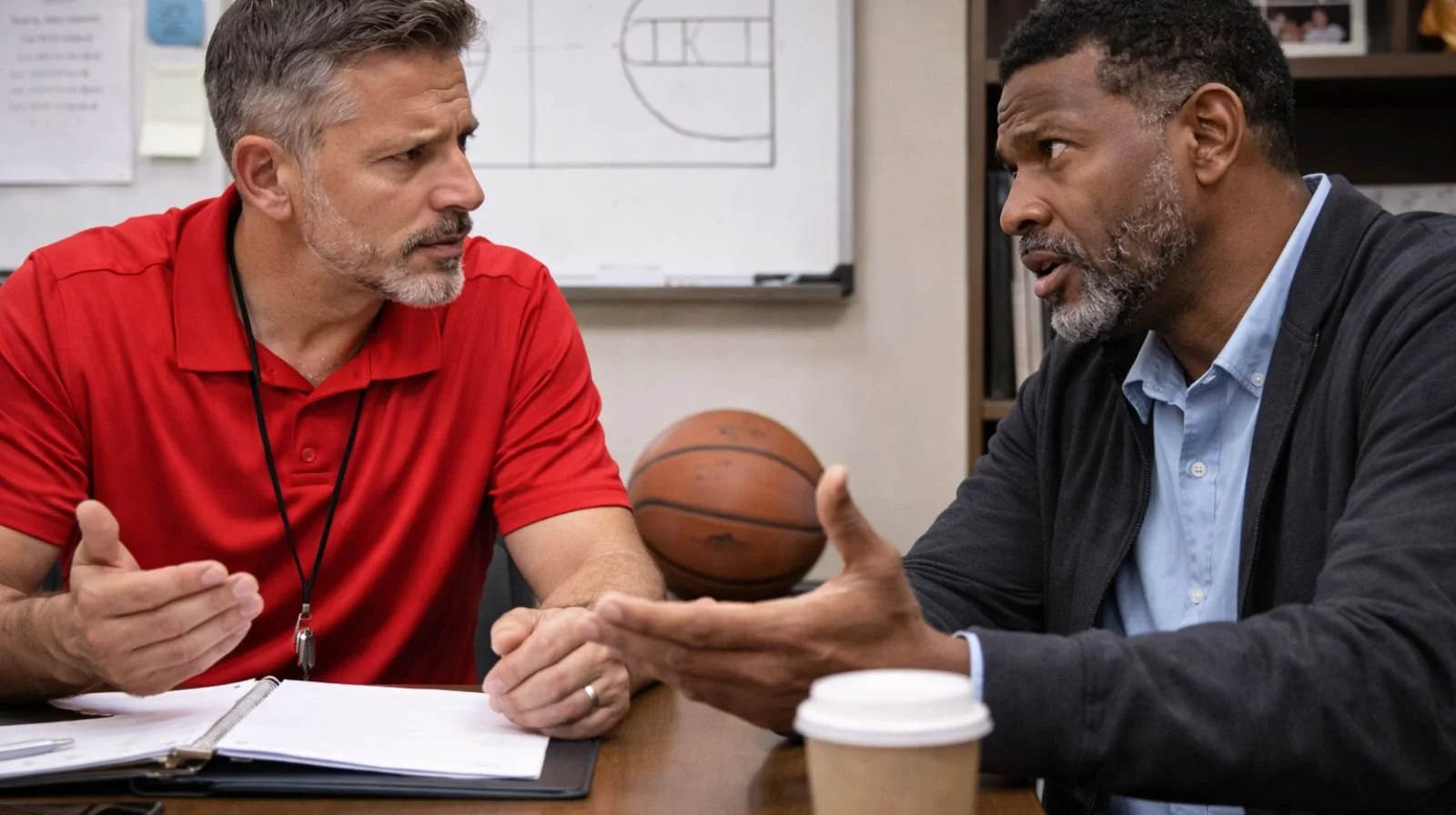
Inevitably, at some point in your athlete’s career, a critical conversation with a coach becomes necessary.
It may involve a coach who doesn’t yet see your athlete’s value.
It may be a situation where your athlete is confused about expectations or struggling to grasp what the coach wants.
Or it may simply be a growing tension that, if left unaddressed, begins to erode confidence and motivation.
Whatever the circumstance, parents almost always ask the same question:
When is the right time to have a critical conversation with a coach?
When to Initiate the Conversation
As a general rule of thumb, parents should consider requesting a meeting anytime their athlete feels:
Unsafe
Unsure of where they stand
Unsatisfied with their overall outlook within the program
When these feelings persist, they deserve attention.
That said, even this guideline leaves plenty of gray area. To help parents make this decision more confidently, I recommend using what I call the 3R Framework.
The 3R Framework: Realize Repercussions or Relief
Whenever a parent brings an issue to a coach—at any level—one of two outcomes is likely.
1. Repercussions
Let’s be honest: coaches are people too. And most people don’t enjoy being challenged at work—especially in a role that is highly subjective.
Coaching uniquely combines:
Private, subjective evaluations (who plays, who sits, who earns trust in practice)
Public, objective outcomes (wins, losses, statistics, and standings)
This dynamic alone creates pressure.
As a former District Athletic Director who hired and evaluated coaches for over a decade, I repeatedly saw how even well-intentioned, professional parent conversations could trigger defensive reactions. In some cases, coaches left meetings with a desire to reassert authority or “teach a lesson”—even when concerns were raised respectfully.
Parents must acknowledge this possibility before initiating a meeting.
2. Relief
On the other hand, relief can come in many forms.
Sometimes it looks like clarity—better understanding expectations or the coach’s process. Sometimes it results in tangible improvement or opportunity.
But most often, true relief comes from being seen and heard.
Like a problem we ignore because it doesn’t hurt enough, issues that aren’t aired out can’t be addressed. If your goal is to surface the concern—regardless of outcome—there is a strong likelihood that some level of relief will occur.
Once you’ve weighed repercussions against potential relief and decide to move forward, how you approach the conversation matters just as much as whether you have it.
How to Approach a Critical Conversation
1. First, Fix the Frame
Framing the conversation correctly is essential.
Some topics will immediately derail the discussion:
Playing time
Coaches cannot—and should not—debate playing time. Their authority rests in deciding who plays, when, and why. Coaches have a right to be wrong, in your opinion, in this area as well.Other players
Discussing or disparaging other athletes or families crosses privacy laws and school policies and will shut the conversation down quickly.
At this point, many parents ask:
“If I can’t talk about playing time or other players, what do I even talk about?”
It’s a fair question.
2. Focus on Progress
The most productive conversations are centered on improvement.
Shift the dialogue toward questions like:
How can we help our athlete better meet expectations?
How can the team environment improve?
How can the player and parent grow within the program?
Improvement is always a two-way street.
If there is nothing you or your athlete are willing to improve, the conversation likely won’t be productive.
3. Finish with Fellowship
Just as multiple parties contribute to what goes wrong, they also contribute to what goes right.
Acknowledge what the coach does well—even if it feels minimal.
Coaches often spend 15–20 hours per week with your child. During that time, they are legally responsible for them. In many ways, they function more like caregivers than professional coaches.
Think about it, everyone thinks fondly of our kid’s babysitter’s, day care providers and kindergarten teachers, coaches spend just as much time babysitting as they do coaching.
At any given moment coaches manage emotional teenagers, academic policies, school politics, parent dynamics, and performance pressure—often with limited training and support.
This isn’t to excuse poor coaching. But it is important context.
In fact, it’s reasonable to estimate that the majority of high school coaches nationwide have been in their roles fewer than five years, leaving little room for mastery—and even less for grace.
Final Thought
Protecting your athlete is always the priority.
But when critical conversations arise, approaching them with clarity, empathy, and structure gives your athlete the best chance to grow—regardless of the outcome.
Good talk. Here’s to yours going the same.
About the Author
Dr. Jason Parker is a former Division I All-American, professional athlete, District Athletic Director, and a licensed attorney. He is the founder and owner of Parent Athlete Advocate, Inc., an organization dedicated to helping athletes and their families navigate the complexities of high school athletics and achieve high-level results both on and off the court.
